Subscribe to get every new episode directly into your inbox
No spam. Unsubscribe anytime.
In this episode
Jen Allen-Knuth spent 22 years in sales and closed more than $50 million with Fortune 500 companies before starting DemandJen on her own. She explains why people go silent after a great first call, the question to ask before you hang up, the four things she puts in every cold message, and how she uses Claude and LinkedIn to run her business with almost no marketing spend.
Key takeaways
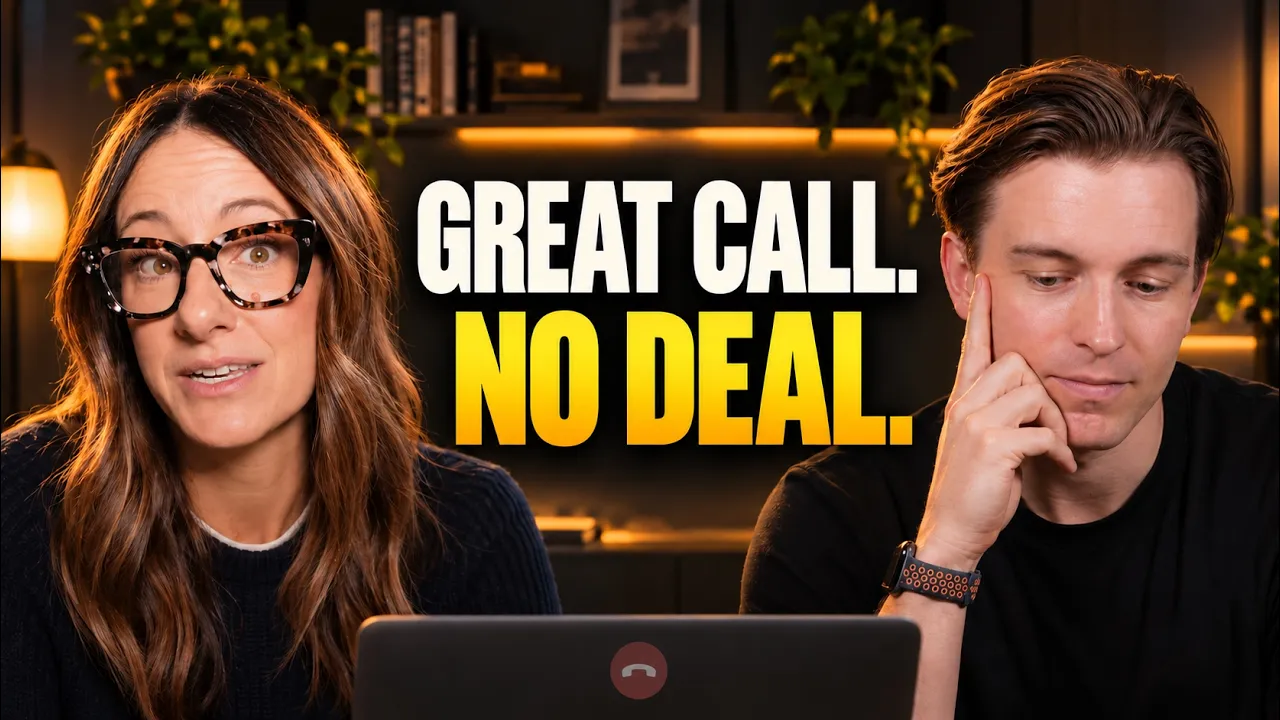
People usually go silent because the first call turned into a pitch. The buyer is still asking whether changing is worth the hassle right now, and nobody asked them.
Before you hang up, ask: “Is this even a problem worth solving, and is it worth solving right now?” If either answer is no, ask “Can you help me understand why?” and plan around their timing.
Jen watches for three signs of real interest: a head tilt while you explain something, questions like “what have you seen others do?”, and the buyer asking for the next step before you do.
Her cold message has four parts: the company’s big goal, the problem that goal probably creates for this person, how another company handled the same problem, and something personal at the end.
Jen started writing on LinkedIn in 2020, three years before she went out on her own, and says she wouldn’t have her business without it. Posting three times a week is enough.
Chapters
0:00
Why people ghost you after a great first call
1:44
What's going on when a proposal gets no reply
4:23
Meet Jen Allen-Knuth: from keynotes to sales workshops
6:04
You don't need to be a "born salesperson"
8:10
Selling to big companies from day one
8:57
"Let's revisit this in six months": the two jobs of a sales call
12:05
Make your first call a swap of ideas
13:20
How to stop feeling pushy
14:43
3 signs a buyer is really interested
16:04
The question to ask before you hang up
17:37
100 messages in 20 days: Mike's outreach challenge
18:31
What to say to get the meeting: Jen's 4-part message
20:56
Why personalisation goes at the end
22:16
AI gathers the ingredients, you bake the cake
23:58
Who to message first: start at the top
26:36
Why you need more than one contact inside a company
27:40
How Jen uses Claude to run her business
31:42
What AI means for people going out on their own
33:14
Why subject matter experts can now build their own tools
34:52
"I wouldn't have this business without content"
36:58
The LinkedIn post that asks instead of tells
39:00
The silent followers who become your best clients
41:15
Selling yourself vs selling a product
43:08
How Jen would start from zero today
46:13
What Jen is most proud of
47:33
Rapid fire: the worst first line of a cold email
48:17
The sales myth Jen would kill
48:35
The first-call question she'd ban
49:17
Two books every seller should read
50:36
Where to find Jen

About the guest
Founder
,
DemandJen
Jen Allen-Knuth is the founder of DemandJen. She spent 22 years in sales, closing more than $50 million with Fortune 500 companies, and now runs workshops and keynotes that help B2B sales teams build and convert pipeline with executives. She has been writing about sales on LinkedIn since 2020.
Show notes
Frequently asked questions
Why do prospects ghost you after a good sales call?
What should you ask at the end of a first sales call?
How do you stop feeling pushy in sales?
What should a cold message to an executive include?
How do you use AI in sales without sounding like AI?
Full transcript
Jen Allen-Knuth 0:00
A great seller loses seven out of 10 deals.
Mike Lovegrove 0:02
This is Jen Allen-Knuth, who never wanted to go into sales, then spent 22 years doing it and closed more than $50 million with Fortune 500 companies.
Jen Allen-Knuth 0:10
Particularly for those of us that have gone off on our own. It is such a different sale when you're selling yourself versus you're selling a product because rejection feels personal, right? It's like I don't want to work with you.
Mike Lovegrove 0:21
But here's what's super interesting. She started writing on LinkedIn in 2020, three years before she went out on her own. And she was mostly writing about the things that she was getting wrong in sales and what she now does instead.
Jen Allen-Knuth 0:32
And this woman came up to me. She's like, I have been following you for years. And I was like, What's your name? And she told me I had no freaking clue. And she was a CMO.
Mike Lovegrove 0:41
And this works so well at building the right type of audience that today her company, DemandJen, works with GE, IBM, and Autodesk. And the only thing she spends on marketing is the odd flight to an event.
Jen Allen-Knuth 0:53
I think we go in being like, where is my round of applause? Well, you're gonna be freaking disappointed. So know that the silent lurkers are there. And those are usually your first customers and some of your best customers,
Mike Lovegrove 1:04
I asked Jen to come on the show and she broke down everything. The one question to ask before you get off a first call so you stop getting ghosted. The four things she puts in every cold message to a busy executive so that they respond to her. And how she has Claude go through her sales calls every week, which is how she found the idea for a workshop that she now sells.
Jen Allen-Knuth 1:23
So there's four ingredients that go into my message, no matter if I'm calling, meeting them at a event, emailing, whatever. Number one is
Mike Lovegrove 1:31
This is the episode you don't want to skip. I'm Michael Lovegrove, and this is Going Sollo. The show where solopreneurs and subject matter experts show you exactly how they find clients, close deals, and build revenue on their own terms. Let's get into it. so I want to touch on this first, what I think is a massive elephant in the room for a lot of people is they might manage to have a great first call, they might end up sending a proposal, they think it looks good, and then they hear absolutely nothing. From what you're seeing and where you sit, like what's happening on the client side.
Jen Allen-Knuth 2:09
Yeah, so two things I think that are happening. And these are things that happen to me a lot. So as I speak about them, know that I'm speaking of of being on the wrong side of it. so number one, I think often we treat the first conversation as kind of a show and tell where it's like, you showed enough interest to get on a call with me, and now I spend the entire time talking about how awesome my service, my product, my solution is. And meanwhile, the buyer on the other side is sitting there thinking, yeah, it might be better than what I'm doing today, how you solve the problem. But change is really hard because I have to stop doing something, start doing something else. I might have to make the case for budget. I might have to get people to unlearn the way that they solve this problem today. And so I think what happens is we on this on the seller side are often having a conversation about what happens if you change. And the buyer is thinking about that road to change. And so we often leave them on that call with a ton of unanswered questions around does it actually make sense for me to go through the hassle of changing right now? And we often, in the pursuit of just hearing what we want to hear, we take things like, this is really cool or this is really interesting as signs that they're buying. So that's number one. Number two, I think it's we often just don't want to hear no, particularly for those of us that have gone off on our own. It is such a and that it's such a different sale when you're selling yourself versus you're selling a product because rejection feels personal, right? It's like I don't want to work with you. And so one of the things that I I learned, I wish I learned it earlier in my career, is before you get off that first call to have a direct, transparent conversation to say, you know, we've talked about a problem today that's occurring in your business. Is this even a problem worth solving and is it worth solving right now? If I don't ask those questions and I leave the buyer to decide that on their own, I leave that first call with no idea generally about like where their sentiment is towards this. So the second thing is really just us having the confidence and the comfort to recognize that a great seller loses seven out of 10 deals. Like a 30% win rate is is incredible. And so I just need to know which deals I'm going to lose and I need to have the confidence to ask those questions early in the sales process. So I don't, you know, lose to ghosts.
Mike Lovegrove 4:18
Amazing. And I want to dive into both of these things as we go through this conversation, Jen. but actually before we go any further, I want people who are listening to this to know who exactly who they're listening to. so what do you do these days and who do you work with and what do you help them do?
Jen Allen-Knuth 4:32
Yeah. so I went off on my own three years ago, started DemandJen. And when I started it, I thought it would largely just be a lot of like keynote speaking at sales kickoffs because that was something I had done at my prior organization that I realized I'd love. the part that I realized after I was doing it is keynotes are fun because you're up there and it's like you're on a stage and it's it's awesome. There's tons of energy because everyone's coming together often for the first time that year. But then you'd walk off the stage and feel like, I don't know, is anyone doing anything with any of this stuff? Probably not. And so a lot of my business now has migrated towards workshops where I'm helping organizations who are saying we have to get outbound stronger here. Not just like outbound prospecting, but first calls that we do with outbound opportunities. Those are very different than an inbound first call. and then how do we build consensus for change when we are the one provoking change in an organization? So Companies will bring me in now and they say, we're really struggling to see conversion on those motions. And then I'll run workshops with their teams on real accounts where they're trying to break in and and expand.
Mike Lovegrove 5:34
Amazing. And I can totally see how keynotes, like you'd you'd hold the room, Jen. You're very good at presenting and articulating yourself. So I can totally see how and hey, that's how we met because you got flown to Amsterdam, right? To do a keynote.
Jen Allen-Knuth 5:51
That was like a very small, small I wouldn't even call that a keynote. That was just like kind of a small discussion and we clicked right away.
Mike Lovegrove 5:58
Yeah, yeah, amazing. Well, good good for me that you decided to start with keynotes before starting to do much more on the workshop front. so I mean you touched on the fact that you went out and started DemandJen a few years ago. And I see a lot of people, and you will see a lot of people do this as well, that who go out on their own, they selling their expertise, maybe they haven't got a background in sales and they're brilliant at what they do, but they haven't really sold much in the past or they dread selling. And I suspect on your journey you have seen people that are not salespeople. They've never been taught how to sell, yet they managed to bring in r like amazing clients. Do you see any commonality between the the people that are succeeding in the world of like building a business of one?
Jen Allen-Knuth 6:36
Yeah, I think I think we have this traditional notion in our mind of what it means to be a great salesperson. And candidly for me, I never wanted to go into sales because that persona was something I never saw about myself. I think of like The Wolf of Wall Street or Boiler Room or like all these classic movies where it's some middle-aged white dude in a suit that just walks in, yells at everybody, and then they sign. And so I think for a lot of us, that's what people, when they're like, I don't want to do sales, like I'm scared of sales. That's, I think, what they're fearful of. I would say the absolute best people that I have met that have gone off on their own, many of them I wouldn't characterize as great salespeople with that sort of definition. I would characterize them as people that were great subject matter experts, that were very compelling in the way they talked about the problem. And I think that is is the difference between being great at sales as a solopreneur or thinking that you have to be great at sales. being really, really good at articulating a problem that you solve in the way that your client would talk about it inside of their business. To me, that's what great selling as a solo is about, because it's about that transfer of of credibility. You've seen what I'm going through, you seem to have an idea. So I think we have to let go of this idea that you have to be this slick talking, like I'll cold call anybody type person. I I wouldn't characterize myself that way. And I think a lot of the solos that I've seen succeed wouldn't either.
Mike Lovegrove 7:58
So a lot of people that go out and then they start selling their expertise. If you are selling your expertise, chances are we're talking like high higher ticket sales. And so The reason why I think you're an incredible person to have on this podcast is selling to enterprises is broadly what these solopreneurs now need to do. And that is, if you're a salesperson, that's something you eventually like graduate into after years and years, right? People don't usually let you run run among enterprise sales straight away. Yet these people now have to do it from day one. and so one of the things that I hear a lot from from them is like, you know, I've had this great conversation, and then I've got this either proposal they said that yeah they're interested and then they just hear nothing and they or or they hear, yeah we'll come back in in six months. Like we'll revisit this in six months. I wanted to understand sort of two things from you, Jen. Like what do you think's happening in those scenarios? And then what can someone do about that in order to like prevent them from thinking I might have a client in six months time.
Jen Allen-Knuth 8:57
Yeah, keep me honest on both of those. So I'll start with number one. What do I think is going on there? I think for many people in sales or as solopreneurs, they haven't actually been in an executive shoes that has to go and buy and implement something and make the case for change. And so we tend to under appreciate how much actually goes into that. So if I'm gonna change anything inside of my business, particularly as an enterprise, this is what what makes enterprise so hard. We have a way to solve the problem today. it might be terrible. For me, it might be some guy who's worked at the company for a thousand years and he does training and no one even really likes it that much. But he gets paid a salary, so it's not really an excess cost and he's not really hurting anybody. that might be what I'm competing against. When we go into that first call and we talk about how much better of a way we have, in my opinion, we're actually having the wrong argument because the first job to be done, if you think about the two jobs to be done in sales. Job number one is that prospect has to say, we have a problem we're solving and we're solving right now. Job number two is are you the right partner? Are you the right solution to solve that problem with? What I see a lot of times is in call number one, we jump right over job number one and we go to job number two. And we're trying to show why our expertise is so valuable and why our solution is better than what they have today. But we never really got the prospect to decide, is this a problem we're solving and we're solving right now? And And most of the time, we're not gonna walk into situations where they're just ready to buy. that is the exception. And so in my opinion, the thing that solos have to get really right is to be able to have a conversation that gets your prospect thinking differently about their current state, such that they say, you know what, you're right. this guy that's been training for a million years is actually impacting this broader thing we need to get done. And we do need to think about that differently. That's a very different conversation than I want to show you all my sales training workshops. It's like, all right, thanks for the freaking drive by. I'm still committed this guy. So I think one, that's what's happening. What do we do about it? So I think we just have to change the focus of that first conversation. In my opinion, right now, I have not maybe 2008. would be the exception. But in my 22 years of being in this profession, I have not seen a time where executives feel less confident in themselves than they do right now because AI has basically made everybody feel like we're behind. And so I think there is this really interesting phenomenon that's happening where people are getting out of the office, they're going to to meetings and communities and they're listening to shows like this and they're saying, what are you doing? And what are you doing? Is it working? Is it not? And there's this really rabid desire to learn. So if we instead of treating our first call like a sales pitch, if we instead say, I I'll use me as an example. I noticed you're making this move up market. there's a couple other companies I've worked with, A, B, and C, that were also going from PLG to up market. And there's a couple things that t that tend that made that hurdle really high to climb. And I've seen them do a couple interesting things around it. Are you open to hearing what I've seen there? What we're doing there is we're positioning ourselves as someone who's like opening a window to what others have done. And in a market like we're in right now, I think that is that's always been valuable, but right now it's really, really valuable, right? you think about all the things people are uncertain of. How am I using AI to do this? what should the technology be that we use for that? I think if we stop selling for a second and we make that first conversation a transfer of insights, that to me. does the hardest job to be done, which is give someone trust and confidence in you, not your resume, but you and what you have to share. So I would say the number one thing I think we need to do differently is treat that first conversation not like a, let me show you all my bells and whistles.
Mike Lovegrove 12:26
Yeah. I love this. And this actually relates back to what you said earlier around like, you know, subject matter experts just being so good at what they do and articulating the area that of the problem that they solve. And one of the things that I am a broken record about with inside the Sollo community is that positioning yourself as the problem solver. So virtually the same thing. and I think when you when you do that, like you're saying, that first interaction should be about understanding if there's even a problem here to be solved, which you put in a slightly different way before, but it was virtually the same thing, right? and when someone does that, there's actually there's this other thing that starts to happen is that both people's guards drop and and you have us the conversation is so much better. and you're much more likely to connect and therefore go forward than if you again try pitch slap them from from day dot. ~ I do want to get on to actually getting the meeting because you kinda touched on that, around how you're even approaching that. But before before we dive to that, Jen, there's like a a lot of people will jump into these calls still and they still feel like they are being pushy. They're like sales and and you sort of articulate this again to start with around like we have we're sold this preconceived idea of what sales is. Do you have any tips and tricks for like how you get over that feeling of like, I don't wanna be pushy, I don't wanna be salesy.
Jen Allen-Knuth 13:43
Yeah. I think a lot of that comes, in my opinion, from a fear of feeling not equipped for the conversation. If you think about when we get pushy, it's when we're not confident. And so if I am not confident, I'm gonna push because I feel like what I'm saying is not enough to get them to want to change or want to buy. So then I go and I apply pressure. I I think about all the deals I lost, right? There's a moment when you feel like you can feel it, you're losing it. And that's when we start to behave. Crazy and we start doing things out of desperation. So, in my opinion, a lot of this comes down to how you prepare for that conversation. Do you do you feel confident that one, you know that organization inside and out? And with AI as it is today, there's no reason why we shouldn't. There's just no reason. And two, do you feel like you've prepared a conversation that is as valuable for the person sitting across from you as it is for you? I think if you can check those two boxes, a lot of the fear around like, pushiness goes away because you're confident in how you're spending that person's time.
Mike Lovegrove 14:43
Amazing. And then at the end of that first call, you did also say this in a slightly different way earlier, but I'm still interested to hear what you you answered this question with Jen. Is what are the signs that someone is genuinely interested and not and a sign that they're not just being nice?
Jen Allen-Knuth 14:59
Yeah. So there's there's a moment, there's there's two things I look for when I'm doing call reviews or I'm thinking about my own conversations. actually there's three things. So one is a nonverbal one, it's a head tilt. So it's like when you're teaching or you're you're describing something, if I see a head tilt like that and someone starts like tilting and thinking, that's a moment where I'm like, that's good. Like that is a that is a magic moment in a call. The second thing would be if I start hearing phrases like, What have you seen others do? Or what do you think others do here? That's a moment where someone's actually looking to my expertise. And I feel like it shows we've crossed the trust barrier. Like they feel like I'm a voice of that market and that that builds trust. And then the third one is they are the ones pushing for next steps. So I feel like if you get to the end of the call and you're one of these always get a next step, always get a next step, that often results in us ending up getting ghosted because there's this uncomfortable moment where someone feels pressured because I actually think most people are nice more than they're mean. And so people don't want to hurt your feelings and they'll say what they think think you want to hear, and then they'll just cancel the meeting later. So I think having the ability to say something like, I hope I've earned the right in this conversation for you to be totally transparent with me. There's probably a lot of problems you could solve right now. Is this even a problem we're solving? Is it we're solving right now? And if you get a no to either of those questions, the perfect question to follow up that with that is can you help me understand why? Like we do not control timing in sales. Sometimes it's like we're about to go through a reorg, we're about to acquire a company, we're about to implement an ERP system. Like there's shit we don't control. And we have to kind of get off our high horse of thinking that like a great salesperson can control every deal. And I think once once you know the obstacle. Sometimes it's avo it's like something you can do something with, sometimes it's not. Then you can actually plan and say, okay, it sounds like you really want to get this person in seat. it sounds like you're at this stage in the hiring process. So it feels like maybe October is the right time to to have this conversation. Why don't we pencil something in then and we can bring that person in? I think people just on the other end of it just wanna feel like you're not pushing them for your win. They wanna feel like you're organizing your timing around theirs.
Mike Lovegrove 17:05
I love that and I love these two statements of it sounds like and it feels like. ~ rather than telling them exactly what it is, you're giving them the opportunity to agree or disagree to get more information. And that that second point you also made around can you explain, can you help me understand why? I think if you give them that first opportunity of is this even a problem with solving, then they're gonna answer that pretty honestly too. it's actually a genius play. Thank you for that one. I'm gonna steal that steal and use.
Jen Allen-Knuth 17:32
Yeah. Steal it. ~
Mike Lovegrove 17:37
And so even before they get to this point, like one of the things that least a lot of the people that I work directly with, yeah, that are that are solopreneurs, we actually just finished this 20 for 100 challenge is what we called it. It was twenty days where you have to reach out to five people per day for those twenty days. And by the end, you've reached out to a hundred people. And I hope you like this, Jen, is that it was not mass outreach, it was targeted and it was you know, making sure that we research the person, do something that is a bit unique. And see what how many meetings we can book. And the initial data I was looking at earlier, people ended up, like the amount of deals in the pipeline now across these Sollo customers who went through is like over two million dollars. ~ Yeah. ~
Jen Allen-Knuth 18:16
My god, that's amazing. I love that.
Mike Lovegrove 18:20
And and yeah, yeah, it's it's it's incredible for me to look at. I'm like, holy shit, look at this. but they the thing to start with. that they were so per super concerned about, right? Was that was getting over the hump of what? Excuse my language here, but what the fuck do I say? So tell me, what the fuck does someone say in order to get that meeting?
Jen Allen-Knuth 18:40
First of all, I love that challenge. Five is such a reasonable amount so you don't get into bad behavior. That is such a cool thing that you did that. I think so. When it comes down to what I say, the the way I think about it is your reader, your person on the other end of the phone, the person on the other DM other end of that DM, they are selfish. Not because they're bad people, but because they have to be, right? they have to do their jobs effectively or they get fired. I would say the leash is even shorter these days. And so if you think about the person on the receiving end of your message being selfish, the subject matter of your message should be all about them. And so there's four ingredients that go into my message, no matter if I'm calling, meeting them at a event, emailing, whatever. Number one is what is the like the objective that I see this company trying to do that I think is going to drive a problem that we solve. So I mentioned one earlier. Like if I see a company that is like, I don't know, like a company like Clay, right? They started off PLG, got a bunch of GTM engineers on it, then they started moving upmarket. When I see a motion like that, that is usually a really big objective for the firm. There's also a common set of problems that follow that, right? if you're used to a bunch of PLG inbound leads on your calendar, then moving upmarket and having to be the ones to reach out, that is usually an obstacle. So I will make the first line about what are they trying to do? Because that executive, that's the stuff they're sitting in rooms thinking about. the second line is then following on from that first line, because of this objective, here's the thing I think might be getting harder for your role. So that's a problem hypothesis. It's simple, it's short, it's not a thesis statement. The more simple, the more you're on the right track. The third line, this is where we usually say, and we help companies do this. And then it's just like, gosh, you can smell the pitch from a mile away. Instead, it goes back to what I said earlier. It's like, this other company, I don't know, Lovable. They they were up against something similar. and our customer there did some really unique things to overcome it. Are you open to hearing what they did differently? Either way, and this is number four, either way, and that's where I feel I feel like personalization goes. So what you're effec so a couple things. One, what you're effectively offering is an I an idea exchange to help them overcome a potential problem that would get in the way of a really important company objective that appeases your selfish reader. Number two, you're putting personalization at the end because I feel like AI has absolutely destroyed personalization in the beginning. I'm not saying you can't use it. I'm just saying, we've all probably been on the receiving end of these emails. Like you mentioned before, I'm a dog lover. I saw your, post on LinkedIn about dogs. I love dogs. Anyway, I'm the leading provider of IT and engineering talent. It's like, that's disgusting, dude. I'd rather you just raw dog it. So I think at the end, a couple things. One, your reader is likely to read the first line and go to the end. So if they see something that is truly unique about them, that is more likely to encourage them to go back up. But two, it does tell the reader in a day and age where everybody's using AI to do everything. If it feels like you, like an example would be PS. I I saw your post on Saturday about, you know, Marnie the rescue dog. I've got two of my own, you know, wanna see a picture. I I would have a really hard time not being like, All right, show me the dogs. So I think you it it also just humanizes you and reminds that person that there's someone on the receiving end, but you don't have that problem where it's like the weird force transition when you use it up front. So those are my four ingredients when I'm thinking about a message.
Mike Lovegrove 22:01
Amazing. And yeah, I would say that there's some of that as well where AI can't can't can't do some of the stuff, right? So you actually have to as a as a human and would we jump to it? what is your view on how you go about within that that message that you're talking about? how would you use AI to help you to to make sure that that's received well?
Jen Allen-Knuth 22:21
Yes. I have this analogy that's probably stupid, but I keep using it, which is like AI will help you gather the ingredients, but you are still the one to bake the cake because it's very obvious when AI bakes the cake. So everyone so the CEO objective, the problem hypothesis, and the status quo, sort of like what I think they might be doing, all of that comes from me prompting AI. So I will take a company. So if I were ex for example, to take G2, which is a client of mine. I would put in there who is the CEO of G2 and what are their what are their most recent comments about the company's 2026, 2027 strategic objectives? What I would get back is that G2 just made this massive acquisition of a bunch of Gartner entities. And now they're bringing those two organizations together. I would also get back that they are repositioning around being how you appear in AEO. So that's a totally different like position of how people typically think of G2, which is like reviews. And so I would take two those two things, and then that would allow me to write that first sentence and then start thinking about hypotheses because of this acquisition, because of this repositioning, what is likely harder for a CRO? That goes into AI. What are other companies that have made that similar move? That would go into AI. So AI is phenomenal at getting me faster insight about the company, but I still have to be the one to storytell because I think you can just tell when it's a pure ripoff from AI.
Mike Lovegrove 23:44
Totally. And I think that storytelling pit bit is both pivotal and genius at this point because humans love stories. and AI is not very good at telling them. So ~ yeah, th thank you for that insight, Jen. So who if you're starting out, like who should you be approaching to start with to try to get some of these these first gigs? So we've you just talked about the message structure, but how do you go about determining who you should be even messaging in the first place?
Jen Allen-Knuth 24:11
Yeah, I so I don't think this is the right way. This is just the way I prefer to do it. I say go to the top because one, I think you'd be surprised how many people are fearful of going to the top. The top is a lonely place. And so if you are really confident in your message, start high because the rest of the sales process will work faster. But if you're not getting anywhere at the top, I do think you have to go below the line and start figuring out, is it that my problem hypothesis is flawed? So, one thing, and and this is different for everybody. one thing I would do when I was first starting out, is if there was a company I was really excited about and I wasn't getting anywhere with the CRO, I would call some sellers and I'd be like, Hey, y I'm just full transparency. I'm looking at your account, like you can tell me to kick rocks. But I'm just kind of curious, like when I looked at your jobs, job descriptions, I see that you guys don't have a sales methodology you mention. When you come on, is it just like onboarding and then you're on the Wild West? Do you get any sort of ongoing training? what does that look like? And that would help me understand. Do I have a competitor that's a sales methodology? Is there someone like me that's already in there? Sometimes people will be like, who are you? What is this? But other times people will be like, all right, yeah, this is what we have. And so I think you have to be okay with rejection, but if something isn't working at the top, you gotta start going down to figure out where is my hypothesis flawed. But I would say the other thing we have to think about right now is one of the things AI cannot do is walk the hallways. And so there's a CMO, Kyle Coleman, at ClickUp who who coined this phrase, at least from what I've heard. And he said, when people are reaching out to me, if they start mentioning names of people on my team, that to me sounds like someone who's worked harder than someone who just came to me. So if it sounds like, in my conversations with Jen and Mike, it feels like the focus on this quarter is about generating up market demand, I have a couple ideas for how we can help you do that. That sounds a bit different than someone who's just like, looks like the company's trying to grow up market. Do you wanna, have a conversation about our tool? So I think there's no right answer, but I'm a big proponent of get really good at going to the top because the top will be able to move mountains if you get it right.
Mike Lovegrove 26:15
No, that's some some super good advice. And I I think this is like a massive missing part to like particularly these solo experts that are going out selling their selling their expertise to to know like so I might actually have to engage with more than just one person in order to get into this particular organization. so it just to just to start with like Is there any tips you can give people on how that we get over that mental model to know, I actually need to find a a a way into an organization. I need to talk to multiple people. I can't just rely on one.
Jen Allen-Knuth 26:46
Yeah, If you have done all of the hard work to come up with a relevant message, to take the time to look at into that business and figure out what they're trying to achieve and what might be getting in their way, you've already done the hard part. finding six more people to tell that story to is actually the easy part. So I think some of it potentially comes from when we haven't done that first part and we're just like, well, what did this what would this person care about? And what would this person care about? That feels like more work because you're looking at it the like the end of one. So I would say for your top accounts, do the upfront work, have that really high quality message. And then you're actually gonna wanna talk to as many people as possible because you're also gonna have a ton more confidence in yourself and the value that you offer. So I think it's just you can't skip the hard stuff in sales. And we always try to find these workarounds and how do I use technology to do things faster. But the hard work works because it's hard. And that's what also gives you confidence to go out and have more conversations than you might initially be comfortable with.
Mike Lovegrove 27:40
Yeah, love it. and speaking of doing the hard work, there is a whole bunch that people are outsourcing to AI. You touched on some of this just before, around like how you can help craft your message. And there's a lot of, I think, laziness that is going on with how people are using AI, thinking that it's going to help them do something and it does not. And so I'm curious to know from you, Jen, what are the things that you are doing with AI that is helping you in your business and helping you sell?
Jen Allen-Knuth 28:06
Yes, I love this question. I think, we've all heard the phrase that it helps eliminate low value work. And then we put things like prospecting in that bucket. I'm like, prospecting is the most high value work. You don't have a funnel if you don't prospect. So set that aside. There's a lot of things as a solopreneur that have made AI has made my life so much easier around. So number one, I'll just start with really basic stuff. I, for whatever reason, like when it when I would get a yes and it came time to create a contract. I would always sit on that until the end of the day, or then it would spill into the next day. I'm like, this is literally the thing I've been working so hard for, but it was such a menial task that it wasn't something I got excited about doing. So I punt it off. So one of the very simple things I'm doing is just I put my contract template in there. I've connected my call recorder, my email, all of that. And so when I get off a call and they want a contract, I just go to Claude and say, fill out the contract, let me once over it. Great, looks good. It takes a minute, right? What used to be just a stupid tedious process. That's a simple one. Same thing for invoicing, it's connected so that when the contract comes in, it sets up a draft, it sets the date, I click okay. That stuff is it to me low value at admin activity. So that's like a sit like that's simple shit. The second thing is I think AI is fabulous for pattern recognition. so to be specific, I have skill like Claude Skills that and projects that every week will go back and it will listen to all of my Discovery calls, and then I'll ask it, what are the what are the most common problem themes that you're hearing in the client's voice, not your voice, not marketing voice? So instead of we have a hard time building demand, right? It's like what I what I would probably hear is my sellers are hitting the phones, but they keep getting hung up on. And I use that in a number of ways. Number one, I use it for content because I think content is our best friend as a solo. so it gives me ideas of how to write about problems based on what people are actually saying. Number two, it gives me ideas of problem hypotheses to start using in my outbound and in my discovery calls. and then number three, it helps me ideate are there things I keep hearing that I should build offers around? so that was one that happened recently where I kept seeing like, you know, we're losing like the theme of creativity started coming up. Like I just feel like our people are bots and they're machines and they've lost like What makes selling great. And it came out as a theme one week. And so I turned that around. I build a workshop off of it. And now I'm making money off that workshop. But would I have would I have seen that theme in the midst of all the other shit that I have going on? Maybe, probably not. So it helps feed ideas for that. And then the last one is just around like operationalizing the basic stuff. Like Making sure when I wake up every morning Claude has sent me my discovery prep and it's in Slack and I have no excuse for not prepping. Making sure that Claude is looking at my follow-up and making sure that's getting out on time. to me, that's the real opportunity and it's made being a solo so much easier than it was in the past. It's just how do I truly take some of the menial tasks? But I would never, ever, ever, ever, ever have it like writing my emails, you know. Building my decks, that kind of stuff. I use it as an assistant when I'm creating decks, but I would never take its output and just send it.
Mike Lovegrove 31:12
Yeah. I love that. I love the fact you were like scheduling tasks too. So you got this mini assistant running for you. so you can stay you can stay lean. you must have seen like a like when did you start? Twenty twenty three you started DemandJen. And so ChatGPT was out, it was shit. It was ~ it I don't even think it surfed the internet. It was just built on twenty twenty one data at the time, right? So
Jen Allen-Knuth 31:33
Ha ha ha.
Mike Lovegrove 31:35
Let's say that you started this with no AI. And now you have this incredible weapon of a for of a tool. You've seen a massive shift. and what do you think this means for like typical business building for for solopreneurs?
Jen Allen-Knuth 31:50
Yeah, I think so one, I think it makes I think it makes the jump to solopreneurship easier. Because I think in our heads, if we've never owned a I certainly felt this way. I never owned a business. I don't know a lot of basic things. Like this year I went to Claude and asked it a bunch of stuff about my taxes that I've always been wondering. And I'm like, what am I doing this stuff right? Like stuff like that. I think it reduces the hill to climb there. Second thing is I think it also then raises the bar for your offer. So I think there's like pluses and minuses. And what I mean by that is you can go on LinkedIn or Twitter or anywhere and everybody can create now. And just because you can doesn't mean that you should. So I think a great example of that is like there's so many People that think, I can ask AI to write cold emails. So I'll create a cold email product and I'll sell that to a bunch of people. Well, if you don't understand the fundamentals of selling and great outreach, you might create something that is technically capable, but falls apart when you actually use it, which is I think what happened with a lot of these AI SDR companies. And so I think the downside of AI making everything easier is you have to be so good at speaking about speaking to your audience, going to where they learn, showing up in those places and being a voice that looks and feels different than the I'm you know, I could do this in ten seconds. Do you want my Claude, you know, framework for that? So I do think it ups the ante for being a solopreneur. If you can get past it, then it makes being solopreneurship way easier.
Mike Lovegrove 33:14
Yeah, I love that. Actually, there's a couple of things that I want to touch on from what you just said. The first one is that, the number of AI SDR companies that have failed because engineers with no subject matter expertise tried to build this thing. And interestingly, I was on boarding a customer a month or so ago and they were like, This has clearly been built by a sales guy. And and they meant that in a good way because like so much of like traditional CRMs or whatever are terrible to use. and so I was like, took that as a compliment as opposed to anything else. Like, because now people like me can build shit when we previously couldn't. so if you're a subject matter expert in the area, there are potential tools that you could create which a traditional developer could not, because they don't have the same subject matter expertise as you do. so that's the first thing that just prompted a thought is that there's probably gonna be a wave of these micro tooling in businesses because now you can create, which is incredible. you don't need to go and raise a whole bunch of VC money to do it. You can just do it. And the other thing was you talked about content and creating and and using what I gather was customer calls to be able create your content. And so I I want to ask you a very open question, Jen. Talk as much as you like about this. Like how do you go about one, the creation of content, and two, how does it affect your business? And I'm going to also I want to also say here that I will tell people that I think I'm the best. Salesperson on LinkedIn, but I am lying. I actually I think you are the best salesperson on LinkedIn. So your content's amazing.
Jen Allen-Knuth 34:46
Well, I thank you. Thank you. I appreciate that. Sometimes you get 10 likes. You're like, is it? Am I even doing should I doing this? so I will say full stop. I would not have this business if I did not, if I hadn't started creating content. And I think the really important thing to know is you gotta do it before you need it. So I started creating content or whatever, writing on LinkedIn. Let's not overcomplicate it. I started writing on LinkedIn in 2020. And I think my approach wasn't Look at me. I know so much. I'm a sales expert because I just I don't like to learn from people like that. I think the audience determines your expertise, not it's not self-appointed. And so what I did is I just started sharing here are the things that I was screwing up, and here's what caused me to realize the way I was going about it wasn't actually the right way. And now here's what I do instead. And it it a couple things. One, it taught me the art of storytelling because someone will beat you up. on social media, if you tell a bad story. And I actually think that's a good thing. So it made me stronger at telling my own story, which then made me stronger about thinking about how I talk about my products and solutions and then how I deliver the work that I do for sales organizations. I will say to your second point about how do I do it, I think everybody's different, but where I see some people get into trouble is they almost make it a chore. I have to do 15 comments a day and I have to post two times a day and I have to post on this channel and that channel. And I think anytime you take something creative and you force a process like that, it sucks the life out of it a little bit. And I feel like a lot of solopreneurs I've talked to go through this cycle where they go really hard in the beginning, they burn out, they hate that process of creating content. And to me, I think a great middle ground is set a reasonable goal every week. If you post Three times a week. That's a freaking win. that is a win. That's enough to get your voice out there. Don't overcomplicate it. And then the second thing I would say is don't always feel like you have to be teaching everything. right now, I'll share something that I've been doing lately that's been really working well. There was a day a couple months ago where I was like, I don't know what to post. I don't have a content calendar. I don't do all I just wake up in the morning, I'm like, what do I want to talk about today? And I was stuck. So I was like, you know what? Why don't I just ask people? what they think about something. So I just wrote a post and said, I need your help. we're getting into sales kickoff season. what's like the the n the coolest thing you've ever seen at a kickoff that if you were responsible for a kickoff, like you would put, you know, number one on the agenda. I'm telling you, that post went s went off so quickly because people want to be heard. And I think there's a lot of people on social media right now who say like, I post and no one says anything. So If you give them a platform to talk, they will take it because people don't want to. I think we're at this point where people are like, stop talking at me, stop preaching at me. And so I I took that and then I said, All right, now let me take all those answers and let me turn that into a content asset, give everybody credit for their answers. So it's not like I'm ripping them off. And then I posted that and that took off. So now that if you watch my content, that is something I'll do like once a month usually. That really drives a lot of meaningful engagement, but then also allows me to give back to these people who are sharing their ideas. So I think we just also have to get away from this idea of content being me talking at everyone and think about what you're doing here. how do you get people engaged and a more memorable motion? So if it's not a podcast, it's like, what can I do in LinkedIn? What can I do with events? what can I do with these different areas? And then how can I use that content on the other side of it?
Mike Lovegrove 38:10
I love that. I love that as a like you're content hacking in a way. You're like one piece to create another piece to create a whole bunch of engagement to probably in your world, what do you want to see in a sales kickoff session? You will have a whole bunch of potential customers that are commenting, they're telling you exactly what they want to see, and then bang, here it is.
Jen Allen-Knuth 38:28
And that's and it's like even if I'm not a good fit for a client, I'll give them that content asset and I'll say, like, you know, on page two, this one company had this really awesome idea to do like a Nike shoe lab for their presidents club winners and it was a total hit. And it's like then you're getting into this moment where it's a memorable conversation. So I think it's like if you can make it tied to your thing, awesome. If it's not tied to your thing, it's still okay because what you really want is conversation. And I think any opportunity you have to to have drive conversation makes you a memorable person in their mind.
Mike Lovegrove 38:56
Yeah, totally. It's genius. There's in in some of the the LinkedIn content creator circles I move in, people talk about people that are silent observers that they you never actually see them comment or like, but they see your stuff. And so you think, no one's liking my posts or engaging, blah, blah, blah. But that type of post idea would get those lurkers to engage. So I think that's I think it's genius.
Jen Allen-Knuth 39:17
And I will tell you that still in this like I went to an event last week that I did a little talk at and this woman came up to me. She's like, I have been following you for years. And I was like, What's your name? And she told me I had ne I had no freaking clue. And she was a CMO. I had no idea this woman was even following me. She's never commented, posted anything about me. So the silent lurkers thing, like, I do think that's an important thing to raise. I'm glad you brought it up. We have to stop waiting for an applause because These channels are I think the tendency is you get one motion. If it's like I put a video, then I get the watch, I don't get the like. If I do a comment below type thing, like I talked about, you get the comment, you don't get the like. But I think we go in being like, where is my round of applause? Well, you're gonna be freaking disappointed. So know that the silent lurkers are there. And those are usually your first customers and some of your best customers, at least in my in my experience.
Mike Lovegrove 40:11
Yeah, I love it. I had to eat humble pie when I went out and started like on my solopreneur journey as well. I thought, cool, I'm gonna go out and I'm gonna and the first one I'm gonna get my first client's gonna be a piece of cake. I'm gonna write a few LinkedIn posts and then they're just gonna come flooding into my inbox. And it didn't happen. And I was like, What the why, what do I do? and to your point, actually, the thing that I found worked really well was I kind of you like LinkedIn by itself actually brings me nothing and the whole idea of what I do now on LinkedIn is just to give stuff away for free. And if people like it, they might subscribe to a lead magnet, like a another resource, right? And then they'll eventually get an email from me and they might they might sign up for Sollo. I'm doing so. and hopefully that's the that's the thing.
Jen Allen-Knuth 40:53
The modern sales motion, in my opinion. It's like you gotta get you can't hide behind these gated assets. you gotta give. And then when someone does elect to spend time with you, the benefit for us is now they know what we think, what we believe, what we're about. So those, in my opinion, those sales move faster because you've already solved for the trust and credibility. Yeah, it might take a little longer up front, but I would much rather have an easy sales process like that.
Mike Lovegrove 41:15
Totally. changing take for a for a second, DemandJen, number one salesperson on LinkedIn. what selling a product is different to selling yourself as the service. What are the things you're looking at doing what are the things that people should do differently when they're thinking about these two things?
Jen Allen-Knuth 41:32
Yeah. resist the urge to talk about yourself the same way you would talk about a product. And what I mean by that is our version of product features and benefits is our resumes. Like I did this, I did that. I went in thinking like I'm never gonna be successful because I was never a CRO and I never wrote a book, and that was a ton of head trash that honestly prevented me from going into solopreneurship. instead, I think think about talk about. talk about yourself in the terms of what you've seen. So you mentioned it earlier, but customer storytelling, problem storytelling, that to me is a better way to connect with someone than I worked at like you will ne almost never hear me say, I worked at Challenger for, 22 years or whatever. I never say that because that one, that opens up potential objections. Like I freaking hate Challenger. And then I have to like, no, no, no, that's not what I do anymore. Right. Like that. But also I think. Now you're in this position where you're trying to elevate yourself on a pedestal. Whereas what I want is an eye-to-eye conversation. So what I want someone to feel is like, wow, this person has seen the same problem that we're going through. And this person has valuable things to say. So resist the temptation to talk about all the things you've done and instead square that around and talk about here's what I'm seeing in the other organizations that are trying to do something similar to you. I think that is the biggest, biggest clutch thing when you're selling a service that is you effectively instead of a product.
Mike Lovegrove 42:53
Nice. I love that. Love that approach. Just next up, Jen, like a lot of people, if they looked at your business, look at the the also the incredible like brand you have built for for DemandJen, they'll look and they'll be like, I'd love to be able to build something like that. And like, if you were starting now, what would you do to get to where you are now sort of like as fast as possible?
Jen Allen-Knuth 43:15
Mm. I do think it's harder now, for sure. So I have empathy for anyone who's starting now. Harder in the sense that it's noisier and everybody knows you're supposed to create content. So if I had to pick three things, number one, probably most importantly, I would figure out where is it that my customers are going to learn. So for me, I'm part of Women in Sales, which is a community for women in sales. I'm part of Sales Assembly, which is a community for CROs and C and sales enablement leaders. I do content for them. And then like even events, I would put in that bucket. Like there's a few events that I go to every year that feel like a community to me. I would, I would sit down and think about like where do I think my customers are going to learn? And I would invest in being present there. Number two, I wouldn't just go and wait for business to come in. is I think about content creation for an early stage solopreneur. one of my favorite ways to do that is to learn out loud. And so what I mean by that is when you go to a community event or a webinar or whatever, share back on whatever channel you think your prospects are on. If it's LinkedIn, Twitter, Reddit, who care, who knows. Share back what you are learning. People love to learn through someone else because it's almost like the TLDR version of it. I don't just sit through an hour webinar if you're giving me the key nuggets. And then people start to recognize you as someone to learn from. So there's a webinar I think I'm gonna go to later today from Exit Five that talks about how to think differently about event strategy in 2027. I could participate in that. And then on the other end of it, I could say, tag them. He's an influential voice in the category. And say, here are three things I learned after attending today. Tag the people who shared those ideas, and now all of a sudden, like I'm a I'm a name that they might potentially recognize, right? If you do that consistently enough. So that's number two. and then number three. I would hold myself accountable for creating content even though it's a cringe moment for everybody. Like I hate to keep beating this content horse, but to to be a solopreneur and have to invest in actual marketing, like SEO and I don't know, paid ads, like that is expensive. And that makes the pressure so much higher in the beginning. One of the blessings of this business is my only marketing spend is like if I pay for a flight to go to an event, I think as much as you can remove the pressure of e expenses around marketing is a good thing. And so content is a way to do that. So I would hold yourself accountable and potentially one of the best ways to do that is people are typically more comfortable talking than writing. Go on a walk, record yourself and just talk about something that you're like a problem that you're passionate about. And then Come back, you can throw that in AI, have AI pull out the key points. Don't use AI's opinion of it, but have that start making sense of what are the things you're really passionate about, what's the problem language that you use, and then use that as anchor points for your posts. I feel like a lot of people are more comfortable talking than they are writing.
Mike Lovegrove 46:06
Yeah, I love that idea of walking, walking to to get to the the point of like, okay, this is the thing that I can start to talk about. And I'm curious, like what are you most proud of with what you've achieved with DemandJen so far?
Jen Allen-Knuth 46:19
I think that's a great question. No one ever asks me that by the way. That was a fabulous question. I think I'm most proud of not losing myself in this process. Like I think I've been very good about not saying, Okay, what's the hook that everybody's using on LinkedIn and like how can I use that hook too? I think I've stayed very true to myself. I've not gotten into like the hacks and you know, gamifying things to stand out. And I I do think that is what has given me staying power. I'm I'm very proud of feeling like I'm a voice that still matters because I think the the time we have as a pl like to be a voice, it gets shorter and shorter all the time with the attention span. But I think because I haven't traded off who I am, I've been able to last. And I hope I last for a while longer. I know I don't have it forever, but I think that's been that's probably the thing I'm most proud of.
Mike Lovegrove 47:10
That's amazing. Well that's that's why they gave you the blue LinkedIn badge next to your name, isn't it?
Jen Allen-Knuth 47:15
Yeah. There by the way, there's no perks to that thing whatsoever other than just a blue check mark.
Mike Lovegrove 47:21
Yeah. Well, I don't know. I think if when when I saw it I was like, Okay, bow down. ~
Jen Allen-Knuth 47:28
Right. Just me me and Oprah.
Mike Lovegrove 47:31
Jen, this is this has been amazing so far. and I just want to finish off with some just some quick fire questions ~ for you.
Jen Allen-Knuth 47:36
Sure, let's do it.
Mike Lovegrove 47:37
So I mean you've trained a bunch of sellers from not just the US but around the world. And yeah, I've just got a coup a couple, couple quick fires. So the first one is what's the worst first line of a cold email email you've seen?
Jen Allen-Knuth 47:50
You know what I'm gonna say. I hope you're well.
Mike Lovegrove 47:52
Sorry. It's just it's just the amount of times that it hits the inbox. what about a subject line that's made you open it?
Jen Allen-Knuth 47:59
I'm trying to think because there's been a couple of good subject signs lately. Someone used Chungus' mom in a subject line and then had like a clever tie back to it. And I was like, if you know my dog's name, you clearly at least have done some research. So that got the open. It didn't get the meeting to be fair, but it just wasn't the relevant thing. But it did get the open.
Mike Lovegrove 48:17
A sales myth you'd love to kill.
Jen Allen-Knuth 48:19
Ooh, that you have to be outgoing or extroverted to be successful in sales. I think some of the best sellers I've ever worked with or met do not fit that mold. They're far more introverted. They're very good at they're very good listeners, they're very curious, but they're not the loudest people in the room.
Mike Lovegrove 48:35
Yeah, love that. What about a question you'd ban from the first call?
Jen Allen-Knuth 48:39
God, these are good. I will I'll pick one that people often think I would like and I hate, which is like, what will that cost you in six months if if you do nothing? Like I talk a lot about cost of inaction. The whole point of cost of an action is that you're bringing a point of view they hadn't considered just by asking the question. One, it feels so salesy and I think prospects hate salesy questions. I never ever see a good response to that. But two, if they had already sized it and you're doing an outbound call, they would have called you. So the whole point is to influence it. It's not to o open handed ask what is this problem gonna cost you if you sit around on your ass doing nothing? It's also offensive in that way.
Mike Lovegrove 49:15
Nice. Love it. and What's a book that you've given to another seller that you just swear by?
Jen Allen-Knuth 49:21
Ugh, I have to admit this. It's embarrassing. I have the hardest time reaching reading sales books. I it's why I like LinkedIn is I like bits and pieces. Like sales books are really hard for me to get through. I never even read Challenger. I just heard it presented so much. So I'm also more of like a vis like an audible visual learner. But if I were to read sales books, the two I would recommend would be Todd Caponi, Four Levers Negotiating. I think negotiation is one of the things I sucked at in sales and Todd does such a brilliant job of simplifying it around like there's four levers you can pull and it's not just price. and then Nate Nasralla's Brief & Brilliant. I think writing is more important than ever in our profession. And Nate is one of the greats at helping people understand how do you get your message across simply, especially when it's an executive audience.
Mike Lovegrove 50:12
Amazing. I'm gonna add I've not read either of those and I'm gonna add them to the list. So thank you very much. Jen, this was amazing. this was this was such a cool hour. I learnt a lot. and I'm sure our listeners will will learn a lot when this when this episode airs. specifically around like one of like how you're getting into like there's some of these large organizations, how you're using your brand to help you do so. I think there's a lot of value that people can get from from learning from you. And so where can people find you?
Jen Allen-Knuth 50:38
LinkedIn, obviously, if I haven't made that clear clear. And then my website is demandjen.com and the gen is with a J. So two places.
Mike Lovegrove 50:47
Well, thank you for this last hour, Jen. and I hope to have you on again soon.
Jen Allen-Knuth 50:51
Thank you. This was a blast
Mike Lovegrove 50:53
Huh. Any time.
Related reading
Why prospects ghost you after a great first call (and what to ask before you hang up)
A good first call doesn't mean a deal. Sales trainer Jen Allen-Knuth explains why buyers go silent after a call that felt great, and the two questions that tell you where you really stand.
How to run a sales call that actually closes: the 7-step run order
A seven-step sales call structure you can run on every call, with scripts to borrow, a talk ratio that keeps the prospect talking, and a quick review to do once you hang up.
20 discovery call questions that win deals (the PRIQ framework)
The 20 discovery call questions I use to find the gap between where a prospect is and where they want to be, organised around the PRIQ framework of Problem, Root cause, Impact and Quantify.
How do you know when to follow up with prospects? A follow-up system for solopreneurs
Most deals slip away in the gap after the call. Here's when to follow up after outreach, calls and proposals, what to say in place of "just checking in", and how to keep every lead on track.
Subscribe to get every new episode directly into your inbox
No spam. Unsubscribe anytime.