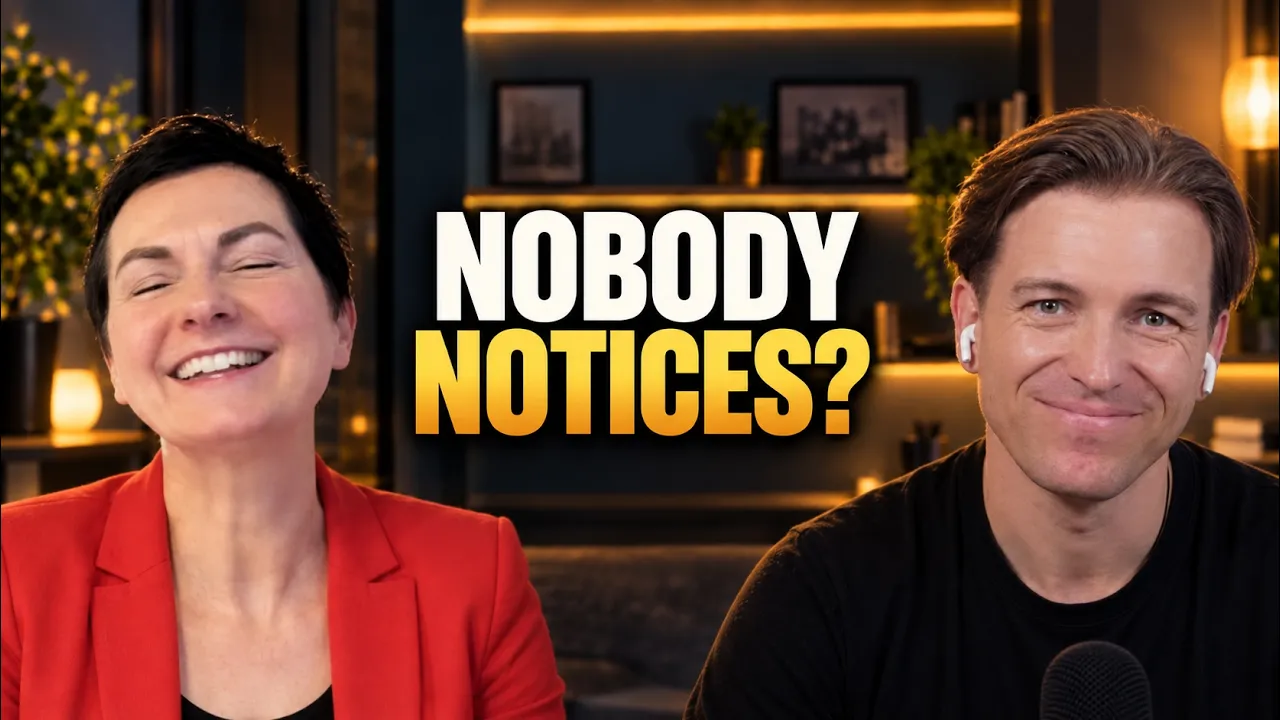
Episode 2
·
·
57 min
How to get noticed for your work without feeling like you're bragging
In this episode
Dr. Petra Wüst has spent 21 years helping people who are excellent at their work and invisible while they do it. She explains why self-promotion is not ego, how to find your USP with a simple post-it exercise, why people buy simple, and why clients come from warm relationships rather than LinkedIn posts alone. She also shares how following up in Sollo won her at least three jobs in three months.
Key takeaways
Self-promotion is not ego. When you share your work so others learn something from it, it creates value and never comes across as bragging.
Your USP is not one strength, it’s a combination of three. Write every strength on a post-it, rank them, pick three, and find what they add up to.
People don’t buy complex, they buy simple. You are more than your brand, but your brand has to be focused and easy to understand.
Clients come from warm relationships. Posting on LinkedIn alone rarely wins business, so go after people who already know you or know someone you know.
Follow up. Petra won at least three jobs in three months only because Sollo reminded her to follow up with leads she would otherwise have let slip.
Chapters
0:00
Intro
0:59
Who Petra works with
2:02
Why being great at your job is not enough
3:29
Self-promotion is not ego
5:32
From the World Economic Forum to her own practice
7:53
Personal branding inside a company vs. building a business
10:41
How to find your USP: the post-it exercise
16:37
People don’t buy complex, they buy simple
20:26
Petra’s brand model: identity, mission, behaviour
23:47
How often you need to repeat something to be known for it
24:56
What experts get wrong when they talk about their work
27:13
Is self-promotion harder in some cultures?
29:18
The golden booklet habit
31:56
Tall poppy syndrome
33:09
Where her clients came from: cold calls, books and one lunch
38:50
Need leads tomorrow? Go after warm people
40:25
Why “just post on LinkedIn” doesn’t work on its own
42:52
Selling while you deliver
44:06
Three jobs won by following up with Sollo
46:48
What she got wrong about getting older
48:31
Living with the ups and downs of solo income
51:48
Who her work is for, and who it isn’t
54:08
Quick fire: overrated advice, visibility vs. credibility
55:27
Her party pitch
56:16
Where to find Petra
About the guest
Self-branding expert
,
Wüst Consulting
Dr. Petra Wüst is a self-branding and team branding expert who has run Wüst Consulting in Basel since 2004. A pioneer of personal branding in Europe, she created the self-branding model that carries her name, has written eight books on the subject and teaches at the University of Basel. She works mostly with experts and leaders in large companies.
Show notes
Resources mentioned
From Mike
Frequently asked questions
How do you promote yourself without bragging?
How do you find your USP?
Can you get clients just by posting on LinkedIn?
How often do you need to do something before people associate it with you?
Is self-promotion harder in Europe?
Full transcript
Petra Wüst 0:00
Has it ever happened to you that you think you do so much and you work so hard and nobody notices? I'm an expert in self marketing and I can help you that this'll never happen to you again.
Mike Lovegrove 0:09
My guest today has spent 21 years with people who are outstanding at what they do and almost invisible while they do it.
Petra Wüst 0:15
Branding is not about wishful thinking, I wish I would be like that, or copying somebody else. And the reason is that you can only sell what you have.
Mike Lovegrove 0:25
She is one of Europe's best-known voices on self-branding and team branding. She built the model that carries her name, and she has been running her own practice in Basel since 2004.
Petra Wüst 0:35
We live in a culture where modesty is very important. You know you don't show off, that's the worst, you know. If showing off, you're being perceived as arrogant, that's the worst. You shouldn't do that.
Mike Lovegrove 0:45
Welcome to Going Sollo, the show where solopreneurs and subject matter experts show you exactly how they find clients, close deals, and build revenue on their own terms. Dr. Petra Wüst. Thank you for joining us.
Petra Wüst 0:58
Thank you for having me.
Mike Lovegrove 0:59
Now Petra, for anyone that's meeting you for the first time, like who do you work with and what is different for them after working with you?
Petra Wüst 1:07
So I work with people who want to have more visibility because they want to have more impact and in the end they want to achieve something. They want to have a you know, another position, a higher position. they want to get the jobs they love. And my clients mainly work in large companies, so I work a lot for for corporate companies. Where you have many people, and it's very important to be visible because otherwise you do not get the opportunities. And what's different for them once they've worked with me is that they are very aware of their strengths, what they deliver, how they want to be perceived. And they also have a very clear idea who the important people in the network are. So who are the important stakeholders, and how can I address them and get them on board so that they give me the opportunities that I want.
Mike Lovegrove 2:02
Amazing. And I mean you've been doing this for twenty one years now and like from what I gather, Petra, you're effectively telling like people who are very good at what they do that being very good at what they do is not enough. is that sometimes hard for them to accept?
Petra Wüst 2:18
Well, yes, of course, because they don't see themselves, you know, as having to promote themselves. You know, they're experts, often they're scientists, they have a very strong educational background, they're very good at what they do, and of course that's what they're interested in as well. They don't want to promote themselves. they want to do their expert work, which they are good at and which they love. And then of course realizing That no, that's not all. You also need to do another part which you're not so good at and which you haven't been trained to do. Of course, that's not what they like to hear so much. And what they often tell me is, you know, this is just not me, you know, I I can't do this. This is not me. And then I tell them that, you know, like in order to be as good as they are in in their expert work, that's something they have trained. They've been to schools, they've been to university, they've done a lot of work, they've trained. And the same holds for this self marketing topic that, you know, it's something you can you can learn, but you have to. And often they don't want to.
Mike Lovegrove 3:29
And if you were to look at from from the the research we did, Petra, you've you've worked with three hundred and ninety odd people across your career, which is incredible to start with, but of the ones that end up being recognized for their work, so they're good at what they do and they actually get recognized for it, like what do those people have in common?
Petra Wüst 3:50
I think they they embraced the idea that self promotion is not ego. Because my clients, you know, I have the nicest clients on earth. My clients are more modest people, they're more quiet people. I don't have them the people who like to show off and think they're the best, they're not my clients because they don't need me. So, and those who Have embraced the idea that self marketing is not about, look how good I am, this is all about me, but who have realized that by talking about your work and by sharing what you do, you create value for others. So you create a learning for others and you create value. And those who understood that, those are the ones who can then put it into practice. And those are the ones who actually do it. And those who cling to the thought that it's something egoistic and it makes you, you know, people not like you and arrogant, those who can never get rid of that idea, for them it will always be hard.
Mike Lovegrove 5:03
Yeah, it makes sense even just thinking about like what some of the people that that, you know, that I've that I've worked with over the years that are in a similar position to you in terms of the work that they they do when they are an individual business. And like self-promotion is something that you just have to do, right? To to tell people about the thing that you do, which is really like an important part, isn't it, of building either your brand within a company or just your your brand so that it you can drive a a business from it. But I'm curious, Petra, because you have a doctorate in political economy, from what I understand, and
Petra Wüst 5:38
Mm-hmm.
Mike Lovegrove 5:39
You've worked with the World Economic Forum. So like how do you go from that to working with like personal branding within organizations?
Petra Wüst 5:47
Well, I mean one thing is that I've always wanted to have my own company. That's always be I always wanted to be a solopreneur and I wanted to be a solopreneur. So I did not want to, you know, build a company and then hire an amount of people. I've always wanted to work on my own. I'm a bit of a lonely wolf. I mean I love my clients, so therefore I'm never lonely. But I just want to do what I want to do. And so that's always been a dream of mine, even when I was 16. I always said, you know, I'm gonna have my own company. It could have been, it could have been a flower shop or it could have been a hotel. I still would love to have a flower shop. so that's what I've always wanted. And then I was deliberately looking for jobs that would lead me into the right direction. And when I was working at the World Economic Forum, I was actually working as a HR consultant. So I was working for a consulting company, but I was based at the World Economic Forum, which of course was super, all young people and in Geneva, wonderful city. So that was really a cool year I had there. But apart from that, I was mainly doing consulting. And of course, that's also where I learned, you know, being a consultant, for example. After I'd done this with the World Economic Forum, I went to a training and consulting company because I thought, no, delivering these trainings, that would be something for me. And I was I was right. I mean, that is really what I love doing. You know, working with these people, leading workshops. That's what I really, really love. That's my that's my zone of genius. And I found that there. And at the same time, I also learned, for example, how do you write an offer? That's something you have to I mean, who tells you how you write an offer? And yeah, because I've worked in a consulting company, I've I've learned all that. And then once I said now the time's ripe to start my own, I already had this all this this these tools and this knowledge that I could that I could use.
Mike Lovegrove 7:53
Amazing. And thinking about that work now specifically, Petra, you mainly do work with people that are wanting to build their brand like within a company. And that's where their goal is to be recognized internally, right? And so what changes when you work with someone whose goal is to be recognized outside of that company and it's for the purposes of building a brand that say generates revenue?
Petra Wüst 8:17
Yes, that is an interesting question. I mean, good branding is always good branding. You know, that that doesn't change. but of course, what is more important, and I do have clients like that, of course. I have solopreneurs building their brand and promoting their brand. I have small small companies, three, four people companies building their brand that I support. And what is the difference is that this actual marketing part and especially the part with you know what is my offer because when you work in a in a company in a large company you have your work you're in this project but you do not have an offer a product or a service that you have to promote and that you have you know gain revenue with and that is the main difference so here Sales psychology is super important. I mean sales psychology is always important. But especially for these solopreneurs or small companies, you know, they they they're they're facing they're facing a bit the similar problem like the experts. They're super at what they do, but they don't know how to they first they don't know often they don't know what what pro I mean they have an idea of what they want to do, but they they cannot package it in a product or a service. That's the first thing. that we have to do and which is different and then of course they have to to promote that and to find customers and clients. And here people often have a wrong understanding. They think, you know, they just need to do some posts on LinkedIn and then people will buy their stuff. But it's
Mike Lovegrove 9:55
Mm.
Petra Wüst 9:55
Just not working that way. So it's it is tough, but it's also very, very interesting. and I love I love to do that work as well. Of course, because I've you know, I've done it all myself. So of course
Mike Lovegrove 10:08
Yeah.
Petra Wüst 10:09
I can draw from, you know, my own experience and what works and what doesn't work. So
Mike Lovegrove 10:15
Totally. And I do want to get into some of that a little bit later on, Petra. Cause I think that like your your story around how you've built your own business is super interesting. And I bet a lot of the listeners today want to hear more around that because I can't remember the stat off the top of my head, but it's something like 90% of of small businesses, including solopreneurs, fail within five years. And you've been doing this for 21 years. So you have something that works really, really well because you've stayed in business. so
Petra Wüst 10:40
That's true.
Mike Lovegrove 10:41
So even that alone, there's lots I think people can learn from. but before diving into that, Petra, one of the things that I see for a lot of people that are starting their journey into solopreneurship, that are coming out of corporate, or actually coming out of any type of company, they are usually very good at several things. So they're not just good at one thing. And I think this is probably the same within corporates, right around when it comes to branding. And so how do you decide what to be known for?
Petra Wüst 11:11
I love that question. That's the question. so it's in fact the thing is it's not the one thing, it is three things. So, you know what we're looking for is the USP, this unique selling proposition, what sets me apart. That's what we're looking for. And if I have one strength, probably somebody else will have that strength as well. If it's not a super niche or something, so somebody else will have that as well. So it's not the one thing that sets me apart, it's a combination. So what I do with my clients, you know, we we work on their strengths, where they say, hey, this is this so so you know, I'd suggest those, you know, the for the for the for the listeners of this podcast, you know, if you want to do this exercise, you just write down all your strengths. And I always suggest to write it on post-it notes. One strength per post-it. And then you write all your strengths on post-its. You have to have at minimum 10 strengths. It can be 30. The more the better. And then you write it all down. And then you prioritize it in a circle, saying, hey, you know, what are the strengths that make me that valuable person I am? What what truly makes me? And this is not job related. It's not my strength for the job. It's my strengths in general. What what makes me that person I am? And that comes in the middle of the circle. And if you say, well, that's something I have as well, but it's not that important to me, more towards the outside. And so you prioritize your strengths on this circle. And at the very end, you choose your three main strengths. They have to be in the middle somewhere because you've already prioritized. But that is really tough. You know, you have to, and that's something important in branding. You have to focus. There is, you know, this saying: if you want to be everything for everybody, you're going to be nothing for nobody. So you need to focus. So what are your three key strengths? And once you found them, then comes the tricky part and the important part. Now you figure out if I combine these strengths, what's the Super strengths, the force, the the the the the the the thing that comes out thanks to combining these three strengths. And because you've done that, the chance that somebody else has one strength that you have is fairly high, but they will not have your combination. And that's
Mike Lovegrove 13:36
Yeah.
Petra Wüst 13:36
What makes it powerful. But that needs some thinking, of course, but that's how you find your USP.
Mike Lovegrove 13:43
It's a amazing framework that I think a lot of people could use. I mean, I know that if we just rattle it off for for me, right? Like I if I was just wanted to be the sales guy, then there's plenty of people who know how to sell well. And maybe it's sales for solopreneurs and providing a system, like a software system for that. Maybe that's my USP, but maybe I need to do your course, Petra.
Petra Wüst 14:07
Well you you just asked me off the record I'm gonna tell you another thing where I think you have I can tell you off I can tell you on the record if you want to.
Mike Lovegrove 14:16
Tell me on the record, Petra.
Petra Wüst 14:18
I tell you on the record no. I mean I knowing you a bit and you know what I I actually think my man is Swiss, you know, I'm Swiss. And you're this guy from New Zealand. And that is just super exciting. It's something, you know, we have this idea of people from New Zealand. It's a stereotype. It might be wrong, but it's of course I I always think, you know, what we're looking for is we're looking for this this emotional thing as well, you know, what sets you apart. And people in the end buy emotions. And if you can bring in a bit of this, which which you do by the way, anyway, you know, this hey, I'm sort of a bit the surfer guy, and now we do sales and that is so cool, you know, it takes away some of the The heaviness of this topic sales, because honestly, most of the people mean although you know I'm I'm I'm good with marketing, I'm not that good with sales, it's not the same. So most of the people and most of your clients definitely don't like sales. It's a bit like my clients, you know, they don't like marketing. So, and if you can take away some of the the heaviness of that topic and some of the god, sales is so difficult and all these cold calling and If you can take away from that by just showing, hey, you know, it's a cool thing as well and I'm the cool guy, that's also part of a USP.
Mike Lovegrove 15:41
Amazing. Actually, funny you say
Petra Wüst 15:43
Mm-hmm.
Mike Lovegrove 15:43
That. And next week we have a by the time this airs, it might've already been might have already passed. But we're doing a webinar next week of like how to sell without selling is the title of it. And there's been what
Petra Wüst 15:53
Yes, exactly. That's what people want.
Mike Lovegrove 15:56
Yeah, there's been over a hundred people who've signed up and funny you say that 'cause it's like that's the thing that I think I have naturally ended up doing through my career is that taking away like the sting from sales and actually making it more around what what problem are you solving. If you're actually solving a problem, then you're not really selling anything, right? You're you're helping someone with a solution. They just happen to pay you for it. And as soon as you make that mental shift, then it suddenly feels a lot easier to have those sales conversations. So thank you for that realization for me that maybe the fact that I'm from a a small little island on the other side of the world that that might help me.
Petra Wüst 16:32
Absolutely. Yeah, absolutely.
Mike Lovegrove 16:37
But Petra, if I asked five people today, what like my USP is, and if I got five different answers from these people, like five completely different answers, like what would that tell you?
Petra Wüst 16:48
Well, it would tell me that obviously you behave different with different people, which is not what we want. As I said, you know, we need to focus. So what is my my core thing? And so if if if different people experience different things from me It's not that positive. And I know that this is difficult because you know, and that's something really important in branding that people also have to under that you also have to understand is that the brand is always focused, and you have a lot of talents. You are not your brand. You have a brand. I make a distinction here. I'm not saying I am a brand, I have a brand. I am a personality with lots of you know, colourful and different things and facets and or you know, me I'm much more than my brand. But the brand is it's a bit like a model. The brand is something that you can you can sell and you can promote because if it's too complex, per people are complex. And that's okay. And nobody takes anything away from you. You know, you're always going to be complex, which is fine. But people do not buy complex. People buy simple. And that's sales psychology. you know, there is this saying, a confused mind doesn't buy. If it's too much, it's too complex, people will not buy. Where I live, there is a little shop, and they have beautiful shop windows. I and I pass this shop window every day, twice, and it's beautiful, and they have these things, and it's you know, with they have scarves and they have stuff, and it's really nice. And it's a small shop. And For about, you know, three or four times I went into this shop and I wanted, I really, really wanted to buy something. And I went in there and said, Today I'm gonna buy something in this shop. And they had so much stuff in there, I've never bought anything. Because it's overwhelming, it's too much, and then I think I could do this, I could buy that, I could no, do do I want this? no, do I want that? And in the end I leave. completely confused. And that's what happens. And the brand avoids that. The brand makes that it's very clear, very focused, very understandable. And that's what people will.
Mike Lovegrove 19:12
Totally agree with you, Petra.
Petra Wüst 19:12
You you're always gonna be the personality. Nobody's gonna take anything away from you. But the brand is what you show and what people are gonna buy.
Mike Lovegrove 19:22
Yeah. I'd even say that I mean I started like trying to build my own personal brands fifteen, eighteen months ago, Petra. And I was kind of all over the show with talking about like different things. And it wasn't until realizing some of what you were just saying now around you need to narrow in on particular areas. That you actually start to get any form of traction. And that goes for everything, right? You just gave a very good example of going into a store, the same as at a restaurant. If there's forty things on the menu, chances are none of them are that good. But if there's two things on the menu, you know they do something very, very well. and you can also
Petra Wüst 19:56
Absolutely. And the interesting thing is it's not about reality. I mean, they might have forty things and everything is super, but it's not how you perceive it. It's not what you think. You think nobody can do forty dishes. You
Mike Lovegrove 20:10
Totally.
Petra Wüst 20:11
Think, you know, the p the pizza place only does pizza, so pizza has to be good. It's your perception and perception in marketing, perception is reality. There is no reality. It's only how what people think about it that counts.
Mike Lovegrove 20:25
Totally. So Petra, like most people listening in to this episode would probably rather do almost anything than talk about themselves. So where do you start when you start working with someone like that?
Petra Wüst 20:37
So what I I mean, I have a model that I work with. And so and this model starts with the brand identity. So what we do is first of all, that's the basis of the whole brand. We always look within ourselves. So branding is not about wishful thinking, I wish I would be like that, or copying somebody else. And the reason is that you can only you can only sell what you have. I cannot say, Heidi Klum, Heidi Klum, she's so successful. I do like Heidi. Well, that works for Heidi, it doesn't work for me. I cannot sell what I don't have. So therefore, for humans, we have to look within ourselves first. Who am I? Yeah, my USP, the emotions that I want to trigger, how emotions are so important. So it's this looking with within ourselves. That's a bright identity. That's what we do first. That's the basis of the whole thing. And once I know who I am, And how I want to be perceived. Then we go and look towards the outside. So of course, the clients are important, but they're only important in the second step. In the first step, it's just about me. And then once I found that core, then I go and look outside and I say, hey, and you know, who is out there and who is a good match with me? Knowing that not everybody's gonna be a good match. Not everybody's gonna be your client. There are some people who think you're great, there's some people who are for others, which is absolutely fine. You cannot serve everybody anyway. So that's the first thing you do looking at that brand identity. Then the next part of my model that's called the brand mission, you know, where you figure out, you know, what's my goal, what do I want to achieve, and then we talk about the deliverables. What is my contribution in a company, or what are my products, my services? And then what's also very powerful and also part of brand mission is behavioural rules. Because the brand lives from being recognized. So that people say, she's the one. She always does this. he always does that. So that's what's so important that people have it in their minds and keep it in their minds, you know, what you stand for. And here behavior is very, very important. And then you figure out, you know, how could I what what what is a behavior that I want to show over and over again so that people people will think that, yes, she always does this and that. because and behavior is it's not a difficult thing to develop, but It's very powerful because in the end you will always be judged by your behavior. You know, I can tell you what a supportive, nice per nice person I am. If in the end you have a problem and I'm not helping you and I don't have time for you, you're not gonna think that I'm a supportive person. So we'll always be judged by our actions. So how do we want to behave? That is super important.
Mike Lovegrove 23:35
I think this is a really interesting topic.
Petra Wüst 23:38
Mm-hmm.
Mike Lovegrove 23:39
Because I think there is a misconception around how often we have to show these actions in order for our brand to become something. So in
Petra Wüst 23:46
Mm-hmm.
Mike Lovegrove 23:47
Your view, Petra, like how often do we need to act in a certain way for s for other people to register that and then have that brand perception of who we are?
Petra Wüst 23:56
I mean depending on what it is, it can be quite fast. I mean I would say just do it as as often as you can and keep repeating it. So don't stop. That's another thing. Once of course you started doing something, people expect it from you to to c continue doing it. but I would say if it's something if it's something that really stands out, you know, you do it twice. And then people will know. If it's something that's not standing out that much, then you do it. Five times, eight times, ten times. But the thing is, this is really fast. You know, people think, ooh, I have to I have to for three months I have to no, no, no. People are really fast in registering these things. No, no, no. You do it you've done it ten times. But of course, the important thing is also how how you know the frequency. I I mean, if you do something every day, people will fairly quickly realize you're doing this. If you do it every month, they will not remember that you did it last month. So if you do it
Mike Lovegrove 24:53
Yeah.
Petra Wüst 24:54
Fairly frequent, they will notice very quickly.
Mike Lovegrove 24:56
So you know, building off on this, Petra, like what do experts get wrong most often when they try to describe what they
Petra Wüst 25:05
Do? yes, they do not focus on the value it creates for others. And that's the secret. That is really the secret. Because you know, in this model that I've spoken about, the third part, three main parts, the third part is the communication part, and that's where at now. You know, now you talk about what you do. And if you want to Be remembered by people. And if you want to trigger interest, you know, so that they l look at what you do, it has to create value for them. So it's not about so people often tell me, you know, if I send these emails to people telling them what I did, that's going to be spam. And I say, no, if you and now I use this this word on purpose, you know, if you vomit bah everything that you do, of course that's spam. Nobody wants to hear that. But if you figure out, you know, I tell you something about my work, something went well, I had a success in my work, something, you know, super. And now I tell I just go and say, ha ha, by the way, I was so good. Then of course you're gonna think, well, I'm not really interested. She's just showing off. But if I tell it in a way so that you have a benefit, you learn something, you get value out of me telling you what I did, then that's gonna be Good and that's good self marketing and that's what people often get wrong. They think that they have to, you know, in with superlatives tell everybody what great stuff they didn't know. Nobody wants to hear that. You know, you talk about your work in a very natural way and you make sure that the other has a benefit from what you tell them. They're learning. Mostly it's a learning. And then it'll never be perceived as boasting.
Mike Lovegrove 26:46
Interesting, interesting you you say that, Petra. Like early in my career, I thought that I needed to sound clever when I went
Petra Wüst 26:52
Mm-hmm.
Mike Lovegrove 26:52
Into meetings. And all it did was confuse or emails weren't responded to because it was like, What is this gibberish that you're trying to make up? so like keeping it simple I think is really important, keeping it conversational with how you present whatever it is, whether it's talking or your brand or how you're selling. Very good point. and I'm just curious, is this like harder in some cultures than others? Cause I from what I gather, Petra, I mean you speak multiple languages and I suspect you therefore have clients that you serve in German, French, and English. Like, is there some cultures that it's harder than others?
Petra Wüst 27:28
Yes, I mean, yeah, of course. This this whole topic of self promotion, self marketing, that is a cultural thing. And I would say, in Europe definitely we find it very difficult. I mean the Swiss people, the Germans, and but also the I I'd say the whole of Europe. We live in a culture where modesty is very important. You know you don't show off, that's the worst, you know. If showing off, you're being perceived as arrogant, that's the worst. You shouldn't do that. So of course for for us it's harder. And when you look at but interestingly enough, I've spoken to Canadians and I have Canadians in my classes. And they say for us it's difficult as well. Who I never get in my classes are Americans, because they obviously have
Mike Lovegrove 28:13
Of course.
Petra Wüst 28:14
A different culture. I don't know about New Zealand people and Australian people so much. We don't get These countries so much here, but we have a lot of Americans, and they just they for them, you know, talking about their successes, that's something, that's kind of that's something positive. That's viewed in the culture, viewed as something positive. And they learn this and they learn to talk about what they do at school. So for them, it's much easier to to do that. And therefore, actually, Americans are hardly ever my clients. I once had an American. client who was a super introvert, very nice person, but so introvert, found it really hard, you know, to talk at all and to talk about themselves. But this this is rare. Usually usually they're good at this. And this is why we here where I am, you know, we have a lot of pharma. So we have a lot of American people working in these pharma companies. And you know, the European people they have to do a good job in self marketing to Have a stand.
Mike Lovegrove 29:18
So I mean after twenty years of this, Petra, twenty-one years I should say. I mean, I know you obviously know a thing or two about personal brand visibility and what would you say is like one thing that everybody should be doing but almost nobody is?
Petra Wüst 29:33
I think everybody should be proud of who they are, value who they are, not dismiss what they do. this is normal, everybody can do this, this is not special. I hear it all the time. That's terrible. I think that's something everybody should do. Just look out more for, you know, the positives, what they did well. Write it down. I always say, you know, I have a golden booklet. Maybe that's the tip. Have a golden booklet. And in this golden booklet you write down every evening you sit down, you write down, you know, what you did well, what happened. Good to them. The the thing is that the brain, of course, it's how the brain works. The brain is always looking for the negative. because that's more that's important for you know, surviving and the brain wants to keep us alive. And so the brain is is is this is why, you know, whenever something embarrassing happens to you or you do something you do something wrong, you will realise that and you will think about it. It'll keep you awake at night. But if you do something well, that'll never keep you awake at night. it's the brain. So you know, to have your golden booklet, write down, every evening, write down what went well today. Make yourself write down at least one thing that you did well. And then you know you capture it and this trains your brain to look out for the positives. And it's also good once you're feeling low and you think that it's not really going that well. You take out your golden booklet, you read it, all your successes, everything that went well. And once you have a performance review in November, you can go back and look at what you did well in February, because you won't remember in November what went well in February. But if you've written it down, you will always have it. That's something everybody should do. And another thing which ties into that is make it a habit to say one positive thing about yourself every day to somebody else, and not just to yourself, to somebody else. Don't always say it to the same person.
Mike Lovegrove 31:36
Ha ha ha.
Petra Wüst 31:37
But you know, that'll train you to talk about your successes. And as I said, you know, this is something you can learn. You're you're not born as a self-marketeer. Hardly anybody is. You learn,
Mike Lovegrove 31:50
Yeah.
Petra Wüst 31:51
You train, it's a muscle. And that's a good exercise. That's something everybody should be doing.
Mike Lovegrove 31:56
What one of the things you said earlier, you're like, I'm not too sure where New Zealanders or Kiwis are on this like continuum of like, do you promote yourself? And I would say in New Zealand there is a massive they call tall poppy syndrome. So I don't know if that's a term over here, but basically you will get cut down if you start trying to promote yourself or doing things that out of the norm.
Petra Wüst 32:14
Yes.
Mike Lovegrove 32:15
And so you don't. And so doing this type of thing, creating a podcast, building my brand on LinkedIn is is it actually initially felt really weird to do because I'm like, am I going to get ridiculed for this? And then it just got to the point where it's like, fuck it, who cares? Like just do it anyway because this is gonna
Petra Wüst 32:32
So
Mike Lovegrove 32:33
Be better for me. And so if there's anyone listening that also feels that way, truth be told, I think no one cares at the end of the day. And so get out and and build your build your brand. There's only good things that can come from it. I really like
Petra Wüst 32:45
Mm-hmm. Sure.
Mike Lovegrove 32:46
That though around what you just said as well, Petra, around like having writing down something good every day and then telling someone else about that. Ma maybe not to the point of, you know, going up to your barista and saying, Hey, check how sexy I'm looking today. Like maybe maybe you don't do that, but but you should say something positive about about yourself every single day. 'Cause you're right, it does. It trains the brain to To look for good things.
Petra Wüst 33:08
Absolutely. Absolutely.
Mike Lovegrove 33:09
So you're a solopreneur, Petra. you've been doing this for we've said this many times for over twenty years. And so you started before we had any of these platforms that we are now using to like find and look for clients. Where did clients come from then and versus where are they coming from now?
Petra Wüst 33:26
So there's two things I did which were super at the time. what I could not do, because I was working for a consulting company, but I could not take clients with me. I couldn't do that, they were very sharp on this, and you know, you would risk being sued and everything. So I didn't do that. So I had really to start from scratch. But I did two things. The first thing was I hired a lady to do my cold calling. You're not gonna like this, Mike. But that was super. So I gave her a list, you know, and then we sent we sent a letter. We sent at that, you know, 20 years ago you sent letters. So I sent a letter to, you know, companies, and then I gave her a that list. And I said, now you go and you call, you know, after that letter saying, did you receive that letter? And then she she said that she works with me. So people thought that she's my assistant. So she had an old that was her, That was her business case, you know, that's services she sold. You know, I'm gonna do cold calling for small companies. And then she did that and she landed two or three really good clients then, who probably I would never have gotten if I'd never cold called. So it was good she did that. Of course it was my offer in the end, they both. But if I had not called after them. I guess I would not have gotten that business. So that's
Mike Lovegrove 34:48
Mm-hmm.
Petra Wüst 34:48
A good thing I did. And then I did another second good thing. I wrote books. That's always been a dream of mine. So I started after fairly quickly after I started my own business. I started writing my first book on this topic that we're talking about. And obviously, because that topic was so new, I w I'm a pi pioneer in you know self-branding, personal branding. It's I'm a pioneer. So 20 years ago. That didn't exist, you know. So then yes, I could publish these books, and that of course got me a lot of promotion. That was super. So it's actually the books that did it on a larger scale. So the difference, of course, yes, there was no social media. So what is very important, and also where I got my biggest clients from. you know, attending network meetings. For example, I'm, you know, in these na women network groups. And, you know, I went to a lunch meeting and there was this lady there who worked in HR for one of these pharma companies. And she's and then I said, you know, I'm doing this and that. And then she said, we're just setting up our training, our training offer for our employees. Don't you want to come around and tell us about, you know, what you do? And this is how I got my foot into what then used to be for years my largest client. So, you know, networking, and of course, we did physical networking, so you went to launches. And of course, today you have LinkedIn. Whereas I still think that personal networking is just very important. So I would say, I mean, it depends on who you want to address. If you want to address global, of course, you cannot do it in purpose. person. But apart from that, I still think, you know, people knowing you, people seeing you, especially now with AI, this human factor, that the human premium is just very important.
Mike Lovegrove 36:49
Totally. Totally.
Petra Wüst 36:51
Writing books is of course still something that sets you apart. It's still something that earns you, you know, promotion and visibility. So that's probably still a success factor.
Mike Lovegrove 37:01
Totally. I think there's a lot of people out there that have written a book purely for the reason that you just outlined is like now their thinking is in a book and so that purpose of that is to generate leads as opposed to make money from the book if it's trying to teach people something. so I think that's a a really valid point. Was there anything that you put like a lot of effort into Petra that you thought, yeah, this is gonna bring me leads and it just did nothing?
Petra Wüst 37:24
Did I do something? I think most of the things have been quite effective that I did. I think it's about your target group, probably mostly. You know, it and of course that takes some time to realise, but you know, I do a lot of these keynote speeches. And I can tell now exactly where I will get new business from, you know, w which audience will generate new business. Because people hear me and then they want to work with me. And I know exactly, you know, or or also it's not just it's not just about the keynotes, it's also about the networking part. I think it's realizing, you know, where where's your crowd? Where's your where's your crow who is your crowd? And where do you find them? And if you go to places or you try to network with people who are just not your crowd. That's going to be time consuming and not lead to much. It's mainly that. Luckily I realised this fairly quickly. You know, where was a an attending attending something, a meeting or a conference or something? Where where where is it a waste of time? Because it's it's just not not my crowd.
Mike Lovegrove 38:50
So this is a really interesting point, Petra, because there'll be people listening to this that are like desperate for leads. And so what would you what would be your advice to someone that needs leads tomorrow?
Petra Wüst 39:01
Go, I mean if you have, go after the warm people. you know, it's I think it's incredibly hard just to broadcast, for example, on LinkedIn to an an an anom an anonymous group, you know, just on LinkedIn. And it does get me leads, but it gets me mostly leads from people who already know me or have seen me. So if you have warm leads, people who've seen you before, you worked with before, or even people who know people you know, that's so much easier to do business with. And that's a mistake I see with my solopreneur clients. They think you know they are on LinkedIn or Insta, depending on what they do, and then they just have to post and then business will come. No, it doesn't. Because People have to trust you before they give you business. And those people who have already known know you, who have a sort of relationship, it can be value a third person, but have a certain relationship, they will trust you far more. So going after this, I think this mistake, the mistake a lot of them make is going after these cold leads. So if you need new business. Go try to get people warm, warm warmed up people.
Mike Lovegrove 40:25
Yeah. totally. And I think this this notion of posting on LinkedIn, we have this wave of like call it LinkedIn bros that say if you just post on LinkedIn, you'll get customers. And it's a lie. And the reason it's a lie is that people need to spend like seven hours with you on average to trust you enough to to buy from you. And they are not going to get that seven hours with LinkedIn posts. You have to do something else. And so you touch on something really important there, Petra, of like you would go to networking events, you'd speak at events, you would, you've written a book, and so all of these things, people are getting to know you and then reminded of that with what you do on social media, as opposed to the other way around.
Petra Wüst 41:04
Mm-hmm.
Mike Lovegrove 41:06
And I think that if you are listening to this and you are thinking, if I just keep posting on LinkedIn, I'll bring in clients. Like it should be part of your strategy. But if it's your only strategy, you'll be dead in the water. So you got to do something else with it.
Petra Wüst 41:19
Absolutely. And for me, by the way, LinkedIn is I mean, I've been around for twenty years, so people know me, especially here in the area, of course. so for me, LinkedIn is not mainly to attract new clients, which is lovely if I do. I mean, I love it, it's cool, but it's mainly to be remembered by people. Because I've written these books and I haven't written a book now for I have to say ten years. So I was super busy writing books the first ten years. I did eight books, six and two workbooks. in in ten years. So I I I I produced a book every one and a half years. and so I was, you know, I was I was I got promotion all the time. I was in the media. And then I stopped writing books. And then of course people might think, well, is she still around? We haven't heard from her, so I'm sure she you know she's not around anymore. So in order to avoid that, that's when I started going on LinkedIn.
Mike Lovegrove 42:12
The
Petra Wüst 42:12
So I only I only started LinkedIn about five years ago, beginning of COVID actually. because I thought, you know, otherwise people will think that I've, you know, I've stopped my I've stopped my consult con consultancy. and it's really nice because now whenever I meet people, you know, they they it's these lurkers. They never like your posts, they never show up. But when I meet them on the street, they I always read your post, I love your videos, I always watch your videos. It's great. No, don't stop doing this. It's so useful. So they see it, obviously they see it. And that's that so so I reach my goal. That's what what I want. That's my main my main goal.
Mike Lovegrove 42:52
So when it comes to like as a as a solopreneur, I think one of the hard parts about it is that you are at the same time, you are selling and you are delivering. And so when you have like a heavy delivery month, how do you keep on top of your like required sales activity to make sure your pipeline keeps filling up?
Petra Wüst 43:12
I think that that's the the main problem. I mean I and I'm probably not not very good at this. So I have an advantage due to the due to the product or the service that I deliver. It's a service that I deliver. I do this code, I do these these workshops and I do these keynotes. And in these workshops and in these keynotes, of course, I can do the sales part as well. And that is, of course, an advantage because, as I said, you know, I'm presenting a keynote somewhere, I have 50 people watching, listening. And then some of these 50 people they will be interested and say, could you do this with us? Could you do that for us? And then, of course, I can get business while delivering. And that's a big advantage because apart from that. Honestly, I haven't found out how to do it.
Mike Lovegrove 44:06
So doing it in waves. And I mean, you you use Sollo. So what was what was going on in your practice that made you go looking for something like Sollo?
Petra Wüst 44:17
Yeah, I that probably ties in with that problem. now, you know, so far, bef I would say before COVID, I had, you know, so much work to do and people approached me and everybody wanted me. And so if somebody just, you know, I had a call with somebody, you know, a re a a discovery call with somebody and they would not get back to me, that wasn't a problem because the next one was already lining up. So I did not need a system to follow up on people. And now with COVID and we're going online and a lot of things have changed in these large companies that I work for. now I need to go I need to go after people. It's like I need to do the cold calling part that this lady used to do 20 years ago, and I also need to follow up on leads. I cannot afford to just let them vanish. So this is why I use Sollo. and I'm really happy that I have it because I have to say that I have I've only been using Sollo, I don't know, three months? You know, when did you start? About three months ago? And in these three months I certainly have three, at least three jobs where I only got them because I followed up and if I had not followed up. I would not have gotten that business.
Mike Lovegrove 45:36
I love to hear that. That's amazing, Petra.
Petra Wüst 45:38
And yes, and I'm so happy because I'm not I'm I'm you know, I'm super I'm super with people, I'm super talking, I'm super delivering all these speeches, but I'm not a good organizer. So I'm I'm I'm just I just wasn't organized. I had no tool, no platform, no nothing where I could catch that. And this is why it it sort of s slipped all the time. And now with Sollo it doesn't slip anymore, which is great. And Sollo of course also helps me, you know. you know I love the agent. helps me draft emails and you know, if I think I don't know, what should I do now? You know, it helps me. So this is this is really cool. This is cool.
Mike Lovegrove 46:20
It's amazing to hear. It's why I even set up to build this was for that reason. Actually it's about a create a tool that I would use and I think you're actually one of our power users, Petra, with Mount you use the the agent at least.
Petra Wüst 46:32
I'm probably the one who uses the agent most. I don't know. I I can't whenever I talk to my colleagues on Sollo I think I'm the only one using this agent, so regularly, I don't know, maybe they do as well, but they don't talk about it. But I'm just flashed by the agent. I think it's it's really good.
Mike Lovegrove 46:48
So I just want to now look back at okay, you've been doing this for twenty years, Petra. So like what did you believe in two thousand and four about running your own practice that you now no longer believe?
Petra Wüst 46:58
You know what I believed? I believed that Once I'm older, this is silly to say that. I shouldn't be saying this.
Mike Lovegrove 47:07
Yeah, you should. Go ahead.
Petra Wüst 47:08
But I believe that once I'm older people don't want to have me anymore. I was afraid that, you know, the young people they would say, you know, why should we listen to her? She's so much older than us. She doesn't know. She's that that that's what I thought. I thought, you know, once you turn fifty. Who who wants to hear what you have to say? And that was so wrong because university is actually one of my best clients. And all these young
Mike Lovegrove 47:36
Okay.
Petra Wüst 47:37
People, they love me and they love they love the advice and they love the help and everything. And that's what I where I was completely wrong. Sounds silly, but yeah. So good I'm wrong. I'm happy I'm wrong.
Mike Lovegrove 47:53
Yeah. I think it makes sense actually that you that you would have initially had that 'cause you at that point in time when you had that thought, you weren't old. You weren't you weren't you weren't an older person, right? So
Petra Wüst 48:04
Yeah.
Mike Lovegrove 48:05
So what took you l years to learn that you think you could have learned in months?
Petra Wüst 48:09
I am a person who is not a fast learner. So therefore I do not think that there's things that I could have learned in months, which I learned in years. Because it takes me time. It always takes me time to learn. I couldn't say that. I don't know. I'd have to think about it.
Mike Lovegrove 48:31
Okay. And what is the part of working for yourself that gets easier?
Petra Wüst 48:36
Easier with time. It's the part where you realize you you you you have learned, or I have learned, that it's an up and down. You know, it's not like when you earn your salary. When you have a salary, you always have at the end of the month, you have X amount on your bank account. And when you're solopreneur, you don't have that. And what gets easier is to Know that in the end it'll always work out and that it's normal that once you have more and once you have less. I think that gets easier, you know, being able to deal with these fluctuations in your earnings. Because when you're early in your solopreneur career career, that can get very frightening if you see
Mike Lovegrove 49:27
Totally.
Petra Wüst 49:28
That. you know, it needs summertime and everybody's away and there is no trainings and there is no coaching clients and I'm not earning anything. my God. that can be frightening. And then you see, yes, but November was a super month. And so in the end it's fine. But that's something you have to you have to to learn. So that gets for me that got easier. But it's still it's still reality. It's still what happens.
Mike Lovegrove 49:53
Yeah. Yeah, totally. I used to feel that all the time as well. It was like the some months would be amazing and then the next month not so much. And so you had to make sure you planned accordingly. Take a a modest salary out of the business as opposed to taking whatever you're earning. 'Cause next month might be different. Can you walk us through one piece of work you're really proud of, Petra? And where the personal team, where they were when they came to you, what you did and what the difference was afterwards?
Petra Wüst 50:20
Yes, I mean if you talk about let's make more more towards the solopreneur. I mean I it's it's wonderful to work with these people. I once had once one one thing I'm really proud of was that, you know, I worked with a with a lar with a small consulting group, three three people they were, three or four people. And they had the problem that they worked in large companies as well. But they always, you know, they they worked there, they did something, the strategy consulting they did for teams so they did their strategy consulting and then they were out again and they said you know it's so so hard to to find more business and then we worked together we worked on you know a strategy how they can you know figure out who who who what is our what is our goal, what is our top of mind goal and then figure out you know how could we reach people within this client company as I said these were warm leads. Because they've already worked in this company and they already did a good job. So moving around in this company is a warm thing. It's not new company that has never heard of you. So how can you then approach people? So figure out, you know, who are the people who would be interesting for us and then have a strategy on how to approach them and pitch to them. And so they they managed to get more business within existing clients. And that of course was was great. So that that was
Mike Lovegrove 51:45
Amazing.
Petra Wüst 51:46
A cool thing. That was a cool thing.
Mike Lovegrove 51:48
And so who is your work for Petra and then who is it also not for?
Petra Wüst 51:53
My work is for people who like structure. I'm a very structured person. So those who want to have a bit of chaos are not suitable for me, or they're not going to be happy with me. And then my work is also for those who want to change something. I once had a client, she was she was a very nice lady, and she came for coaching, and she came and she came and it never stopped and she came good money with her, so good client. But you know, there came a moment when I really said, you know, you cannot come anymore. Because we talk about the same thing all the time. We've been talking about this for months, and you've never put anything into practice, you never did anything, you cannot come anymore. And then she said, well, you know, but it's so nice with you. This is like wellness. going to this ball and I mean, obviously she wanted to pay for it, which is fine, but it's not the idea. So I like to work with people who really want to change something and want to work on themselves, want to work on their business, on whatever goal they have. That is that is very important to me. And the more and this is why I always always give you them homework. You know, when working with me, you always have homework. Because You know, you have to put these things into practice. You have to you know, keep working on these things. Otherwise you're not gonna achieve anything. This is this is hard work. But it's beautiful work because it's you know, you work for yourself and with yourself.
Mike Lovegrove 53:27
Petra, before we close out, I or the Sollo team at a bit of research and found out that there's one thing you would really like to do is write a crime novel one day.
Petra Wüst 53:37
Yes.
Mike Lovegrove 53:37
Is that still on the list?
Petra Wüst 53:40
At the moment not so much, no. No, I had a time maybe eight years ago where that was very h high priority for me. But at the moment I don't think I have the nerve for, you know, writing another two hundred pages. no, but you know, who knows? Maybe once I'm retired or something. Could be an option. Maybe one day.
Mike Lovegrove 54:01
Maybe one day add it to the the bookshelf of books that Petra Petra's already written.
Petra Wüst 54:07
Exactly.
Mike Lovegrove 54:08
Petra, what's the most overrated piece of personal branding advice?
Petra Wüst 54:12
I think the most overrating, the most overrating piece of personal branding advice is be authentic. Of course that's super important and you have to be authentic, but if you do it the right way and if you build the your brand the right way, it's gonna be authentic anyway. So don't worry about it.
Mike Lovegrove 54:30
Visibility or credibility if you had to choose.
Petra Wüst 54:34
If I had to choose between visibility and credibility, that's a tough one. I would go for visibility because credibility if nobody knows about it. Hmm.
Mike Lovegrove 54:48
Doesn't matter. I actually speaking of this, like when it comes to visibility versus credibility, there are like so many influencers teaching stuff that are like early twenties. They've actually got no life experience in this specific field that are making bank they have no cred, but they have so much visibility, people buy their shit. So I also agree with you.
Petra Wüst 55:07
Yes, yes, but then haha, but then no, yeah, but that's not my line of work. I'm not teaching people how to sell hair products. Do you have to have this do you have to have the substance and the expertise? But my clients always have the substance and the expertise. But you need both. They're very important. You need
Mike Lovegrove 55:26
Yeah.
Petra Wüst 55:26
Both.
Mike Lovegrove 55:27
What do you say at parties when someone asks what you do?
Petra Wüst 55:29
Well, I have this pitch which goes at parties. Somebody ask me what I do, I'd say, you know, has it ever happened to you that you think you do so much and you work so hard and nobody notices? I'm an expert in self marketing and I can help you that this'll never happen to you again.
Mike Lovegrove 55:47
Boom! That's a mic drop.
Petra Wüst 55:49
It is.
Mike Lovegrove 55:49
Amazing.
Petra Wüst 55:50
And it works wonders. I mean, everybody comes, you know, and then I say, and then I say, and if you want to, you know, learn more, let me know. And then everybody says, tell me more, tell me more what you do. So that that is obviously a pain so many people have. You know, I work so hard and nobody notices. That's such a painful thing. And then there's me who can help them get rid of that pain. That's cool. Works works really well.
Mike Lovegrove 56:16
Incredible Petra. I think I've learned a lot on this this call and I'm sure everyone would have also learned lot on this on this episode. so you know if someone wanted to get in contact with you or or find you, where can they do that, Petra?
Petra Wüst 56:31
I mean, of course, they can always send me an email. or they can reach me on LinkedIn. I'm often on LinkedIn. I also post on LinkedIn about three times a week. so if you want to get regular tips on this topic of self branding, self-marketing, follow me, contact me, reach out, send me a DM. I'm always super happy to meet new people. That's major
Mike Lovegrove 56:51
Amazing.
Petra Wüst 56:52
Part of the fun on LinkedIn.
Mike Lovegrove 56:55
I'll put all of those details in the show notes and if we can, we'll also link some of your books you've previously published too, Petra. but thank you have thank you for being on the show.
Petra Wüst 57:01
That would be fantastic. They're in German though. They're in German, huh? But still.
Mike Lovegrove 57:04
I'm sure there'll be people there listening that may speak German as well, so we'll publish them regardless.
Petra Wüst 57:07
Yeah, that's true.
Mike Lovegrove 57:09
But thank you very much for being on the show, Petra, and go well.
Petra Wüst 57:13
Great pleasure. You too. Thanks for having me.
Related reading
How to find clients as a solo consultant or fractional exec (without spending a cent on ads)
The daily system that fills a consultant's pipeline: a four-line ICP, warm outreach, relevant cold messages to 5 new people a day, a LinkedIn content funnel and four numbers to check on Fridays.
How do you know when to follow up with prospects? A follow-up system for solopreneurs
Most deals slip away in the gap after the call. Here's when to follow up after outreach, calls and proposals, what to say in place of "just checking in", and how to keep every lead on track.
How to pitch your services so people want to buy: the 8-step pitch structure
Most pitches get stuck on what you do and how you do it. April Dunford's 8-step structure puts the buyer's world first, and I walk through a worked example for every step.
Do you really need a CRM as a solopreneur? (An honest answer)
What you need on day one is a simple sales system, and CRM software can wait. This guide shows how to spot when you've outgrown your spreadsheet and how to choose a CRM fairly.